
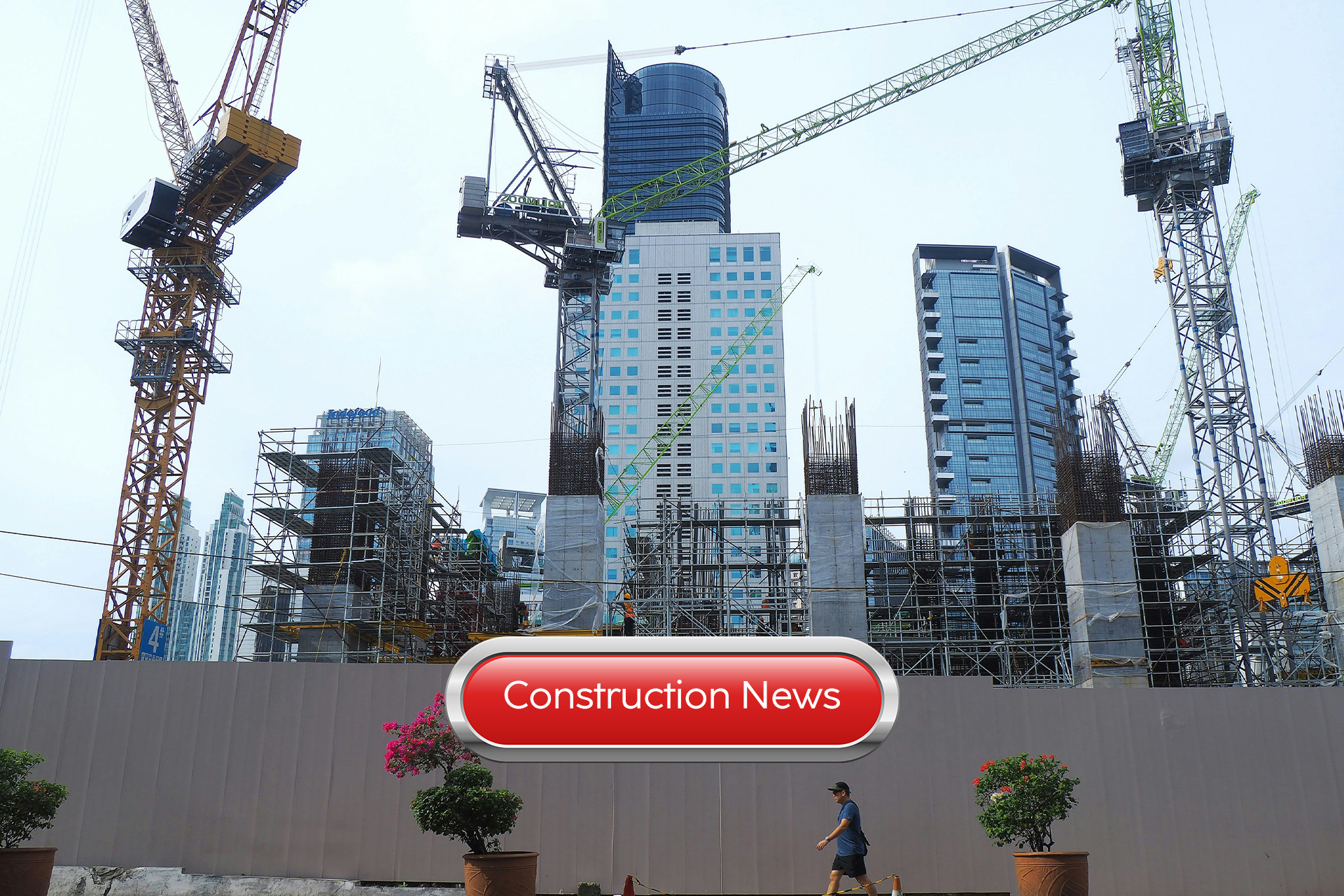
Indonesia’s Construction Industry plays an important role in the national economy because it is directly connected to the development of roads, bridges, ports, industrial areas, housing, public facilities, energy infrastructure, and more. Data from Statistics Indonesia (BPS) shows that the construction sector contributed 9.82% to Indonesia’s Gross Domestic Product (GDP) in the third quarter of 2025. For the full year of 2025, its contribution reached 9.83%, making construction the fourth-largest contributing economic sector to national GDP. As of August 2025, the sector also employed around 9.54 million workers in Indonesia.
This significant contribution shows that construction is closely linked to other economic activities. When the development of industrial areas increases, demand for buildings, utilities, roads, electricity, and logistics systems also grows. When energy capacity is expanded, power plants, transmission networks, substations, and various supporting infrastructure are required. Likewise, when housing demand increases due to urbanization, residential and urban development is also encouraged.
The market also has substantial room for growth. IMARC research estimates that the Indonesian construction market was worth US$125.4 billion in 2025, increasing to US$133.9 billion in 2026, and potentially reaching US$226.1 billion by 2034, with a compound annual growth rate (CAGR) of around 6.77% during 2026-2034. This projection is a market estimate rather than a government statistical figure, but it provides an indication of the industry’s expected long-term growth potential.
This growth is supported by a national development agenda that still requires significant construction capacity. The list of National Strategic Projects under Coordinating Ministry for Economic Affairs Regulation No. 16 of 2025 includes 226 projects and 24 programs with a potential investment value of around Rp6,491 trillion. A large portion of the funding needs listed in these projects is also expected to come from the private sector, indicating room for participation by businesses beyond government financing.
In a broader context, the development of Nusantara also remains one of the country’s major construction agendas. The Nusantara Capital Authority recorded an allocation of Rp48.8 trillion from the state budget (APBN) for the development of IKN during the 2025-2029 period. In addition, there are public-private partnership (PPP) projects worth around Rp60.93 trillion currently in process, including plans to build 97 apartment towers, 129 landed houses, as well as road projects and a multi-utility tunnel in the Central Government Core Area.
These figures provide a broader context for business opportunities in Indonesia’s construction sector. The market is shaped not only by government projects, but also by the needs of industrial areas, energy, housing, transportation, utilities, technology, and various commercial projects that grow alongside economic activity.
Indonesia’s Construction Industry Grows Alongside National Infrastructure Needs
Infrastructure development is one of the main drivers of construction demand. Roads, ports, airports, dams, clean water systems, sanitation, electricity networks, and urban transportation require large-scale and continuous construction work. The latest National Strategic Projects list itself covers roads, dams and irrigation, industrial areas, railways, energy, ports, clean water and sanitation, airports, tourism, technology, and housing.
This composition shows that Indonesia’s development increasingly requires construction that is connected to other economic activities. A port, for example, does not operate in isolation. It requires road access, logistics areas, warehouses, utilities, and industrial networks behind it. Industrial areas also need electricity, water, waste treatment, internal roads, production facilities, and supporting buildings.
These requirements mean that construction companies need increasingly specialized capabilities. Large-scale projects involve challenges related to cost control, coordination among multiple parties, safety management, work quality, project schedules, and the ability to meet applicable technical standards.
Energy development is also becoming a source of long-term demand. The Electricity Supply Business Plan (RUPTL) of PLN for 2025-2034 records investment needs of around US$188 billion or Rp2,967 trillion during the period. The plan includes the development of power plants with an additional capacity of 69.5 GW, transmission networks and substations, distribution systems, energy storage batteries, as well as smart grid development.
The scale of these requirements creates opportunities for companies involved in engineering, construction, technology, equipment, consulting, and various supporting services. Foreign companies with experience in energy projects, transportation, digital infrastructure, or high-tech construction can view Indonesia as a market with long-term demand.
Urbanization is another factor supporting construction demand. City development requires homes, apartments, commercial areas, public facilities, utilities, and transportation networks. As the urban population grows, construction needs go beyond the number of housing units. The infrastructure supporting daily life in these areas must also expand.
In this context, construction has an interesting position because demand is coming from several directions at the same time. National infrastructure, industrial areas, energy, housing, and business expansion each create different needs, but all of them require physical development capacity.
BPS data also shows the significant contribution of the construction sector to employment. Data from August 2025 recorded 9,543,258 people working in the construction sector. This figure illustrates the size of the labor ecosystem that has already developed in Indonesia.
Therefore, construction growth has a broader impact than the value of individual projects. When projects move forward, demand for workers, materials, equipment, logistics, professional services, and suppliers also increases. This is what gives the construction sector a direct connection with various surrounding economic chains.
At the same time, the increasing scale of development requires companies to operate with greater efficiency and stronger controls. Projects involving many stakeholders require much more structured coordination than smaller-scale projects.
Technology Is Shaping a New Direction for Indonesia’s Construction Industry
Growth in the construction market is not determined only by the number of projects. The way projects are designed and executed is also changing. Digitalization, Building Information Modeling (BIM), automation, prefabrication, drones, the Internet of Things, and artificial intelligence are increasingly being discussed as part of construction transformation because the industry needs more measurable processes.
BIM is one example that already has an official foundation in Indonesia. The Directorate General of Highways at the Ministry of Public Works has issued Guidelines for the Implementation of Building Information Modeling for road and bridge construction through document 12/P/BM/2023. The guidelines cover organization, resource requirements, budgeting, modeling, simulation, data management, and digital asset handover at several stages of a project.
The use of technologies such as BIM is significant because modern construction challenges do not occur only during the physical building stage. Project information management has also become an important part of construction. When design data, material requirements, work changes, and asset information can be managed in a more integrated manner, coordination among project parties can be based on clearer information.
Technology is also closely related to productivity challenges. Larger projects require methods that can reduce errors, speed up coordination, and help teams make decisions based on data. For this reason, digitalization can have a practical role in project management rather than simply serving as a symbol of industry modernization.
Sustainable construction trends are also becoming increasingly relevant as attention grows toward energy efficiency, material use, waste reduction, and environmental impacts. In infrastructure and building projects, considerations such as energy use, materials, waste management, and sustainability are becoming increasingly important parts of planning requirements.
Prefabrication and modular construction also offer a different approach to the building process. Some components can be manufactured in advance with a certain level of standardization before being installed at the project site. Such methods can be used when the project characteristics and technical requirements support their application.
However, each technology still needs to be applied according to project needs. BIM does not automatically solve every design problem. AI does not automatically replace the expertise of engineers. Prefabrication is also not always suitable for every type of work. Its effectiveness depends on the characteristics of the project, the company’s capabilities, technical requirements, costs, and applicable standards.
This shows that technological change does not eliminate the importance of fundamental construction capabilities. Instead, companies need a combination of technical expertise, professional personnel, project management, regulatory knowledge, and the ability to use suitable technologies.
For foreign companies, these requirements can become an area of differentiation. Companies with international experience in specific types of projects, specialized construction technologies, or engineering capabilities that are not commonly available in the market may have opportunities as Indonesia develops large and complex projects.
However, technical capabilities still need to be translated into a business structure that complies with Indonesian regulations. A foreign company with advanced technology cannot automatically offer construction services in Indonesia without meeting the applicable business and licensing requirements.
Entering Indonesia’s Construction Industry Requires the Right Business Structure and Licensing
For foreign construction companies, market opportunities need to be accompanied by an understanding of how the company can legally conduct business activities in Indonesia. In the construction sector, there is a specific framework distinguishing national business entities, foreign investment construction services business entities or BUJK PMA, and Foreign Construction Services Business Representative Offices or BUJKA.
Law No. 2 of 2017 on Construction Services, as subsequently amended, serves as one of the main legal foundations for this sector. For the broader Risk-Based Business Licensing system, the government currently uses Government Regulation No. 28 of 2025, which replaces Government Regulation No. 5 of 2021.
The Ministry of Public Works provides separate licensing services for BUJKN, BUJK PMA, and BUJKA Representative Offices. This means foreign companies seeking to enter the construction sector need to determine their form of business presence based on the activities they intend to carry out, rather than simply establishing a general foreign company and assuming that construction activities can be conducted through the same mechanism.
For a BUJKA Representative Office, the foreign company serving as the basis for its establishment must be a construction services business entity in its home country with a large qualification and a construction services certificate in its home country. After obtaining the required licenses, a BUJKA must establish an Operational Cooperation or Kerja Sama Operasi (KSO) with a BUJKN for every construction services business activity carried out in Indonesia.
The KSO partner also cannot be selected arbitrarily. The Ministry of Public Works requires the BUJKN partner to have certain forms and qualifications, including being established as a limited liability company, holding a large-qualification construction business certificate (SBU), and having the same sub-classification as the BUJKA Representative Office.
There are also requirements concerning the distribution of work. For construction work and integrated construction work, at least 50% of the value of the work must be carried out in Indonesia, while at least 30% of the value of the work must be performed by the BUJKN KSO partner. For construction consulting services, all work must be carried out in Indonesia, and at least 50% of the value of the work must be performed by the BUJKN KSO partner. These provisions are set out in Minister of Public Works and Housing Regulation No. 9 of 2019, which remains a reference in technical information concerning BUJKA.
Read also: Indonesia’s New Housing Market Shows Stronger Signs of Recovery in Q2 2026
BUJKA Representative Offices may also only provide construction services in market segments that involve high risk, high technology, and/or high costs. This provision shows that the BUJKA route is intended for foreign companies with capabilities that match the characteristics of such projects.
In addition to KSO and qualification requirements, there are other obligations concerning the use of domestic construction materials and technologies, technology transfer, Indonesian workers, the recording of experience, activity reporting, and the implementation of security, safety, health, and sustainability standards. Official information from the Ministry of Public Works also states that a BUJKA Representative Office must possess high, up-to-date, efficient, and environmentally friendly technology while taking local wisdom into consideration.
This framework shows that Indonesia’s market does provide room for foreign construction companies, but such companies must enter through the appropriate structure and sector-specific requirements. Foreign expertise, experience, and technology can become part of national projects, while implementation remains subject to Indonesia’s applicable regulations and cooperation framework.
For foreign companies that already know the types of work and projects they are targeting, preparation can be carried out in a more focused manner. The company structure can be adjusted to its business activities, certification needs can be mapped out, and the need for a local partner can be prepared before the company enters the project bidding stage.
This is also why an expansion decision should not begin solely with the search for projects. Legal and administrative work needs to support the business in the background. Companies need to understand the appropriate form of business presence, KBLI and scope of activities, business licensing, construction certification, ownership structure if using a BUJK PMA, or the requirements for a BUJKA Representative Office if that route is selected.
Operational needs also grow once the company begins building its team. A foreign construction company may need to recruit a certain number of Indonesian workers, bring engineers or specialists from its headquarters, place project managers in Indonesia, or establish local administrative and financial functions.
For foreign workers, immigration requirements need to be aligned with the activities they will carry out in Indonesia. Visas and stay permits cannot be selected solely based on position or nationality. They need to correspond to the purpose and activities permitted under immigration regulations.
At this stage, construction expansion begins to intersect with broader business needs. Entity establishment, business licensing, compliance, accounting, tax reporting, recruitment, immigration, and the relocation of specialists can all become part of a company’s expansion preparation.
Bizindo can support foreign companies preparing to expand into Indonesia’s construction sector through Legal Entity Setup, including requirements related to PT PMA and Representative Offices, as well as Business Licensing and KBLI consulting. For foreign construction companies considering the BUJKA route, structural and administrative requirements can be prepared while taking into account the applicable sector-specific regulations.
Once operations begin, companies may develop additional needs for Accounting and Tax Reporting to manage financial administration and tax obligations. When companies build local teams, Recruitment and Employer of Record can support workforce and employee administration requirements.
Meanwhile, companies bringing engineers, project managers, specialists, or other foreign experts from outside Indonesia can use Immigration Services for visa and stay permit requirements that match their activities. Expat Relocation can also provide support when foreign employees or management are relocated to Indonesia to manage projects over a longer period.
These combined requirements show that entering Indonesia’s Construction Industry does not stop at finding an attractive project. Companies also need a structure that allows those activities to be carried out legally, administratively, and operationally.
With a contribution of 9.83% to GDP in 2025, employment of around 9.54 million workers as of August 2025, National Strategic Projects with potential investment of around Rp6,491 trillion, and energy investment needs of around US$188 billion under the 2025-2034 RUPTL, the construction sector plays a major role in Indonesia’s development agenda.
These developments are also changing how projects are carried out. Digitalization, BIM, the need for sustainable construction, efficiency, and the use of technology are increasingly becoming part of industry discussions. For foreign companies with specialized expertise, these conditions create opportunities to participate in projects that require specific technical capabilities and experience.
However, these opportunities come with specific business requirements. Qualifications, certification, business structures, KSO arrangements, workforce, technology, and licensing need to be understood before operations begin.
For companies considering the Indonesian market, proper preparation can start by determining the appropriate business model and form of presence. Once that structure is clear, licensing, certification, workforce, tax, and immigration requirements can be mapped out according to the operational plan.
Ultimately, the strength of Indonesia’s Construction Industry is reflected not only in its contribution to the economy, but also in the many development needs that remain ongoing. Infrastructure, energy, industrial areas, housing, transportation, and technology will continue to create demand for companies capable of delivering projects with the appropriate technical standards and capacity.
For foreign construction companies, Indonesia offers a market with significant room for growth, but those opportunities are most effectively pursued when expansion is prepared around the right business structure and regulatory framework. With a legal, licensing, workforce, and operational foundation that is properly organized from the outset, companies can be better prepared to participate in the continued development of Indonesia’s construction sector.


 20% off today. Whatsapp us!